info@tutelaprep.com
 +91 88263 45541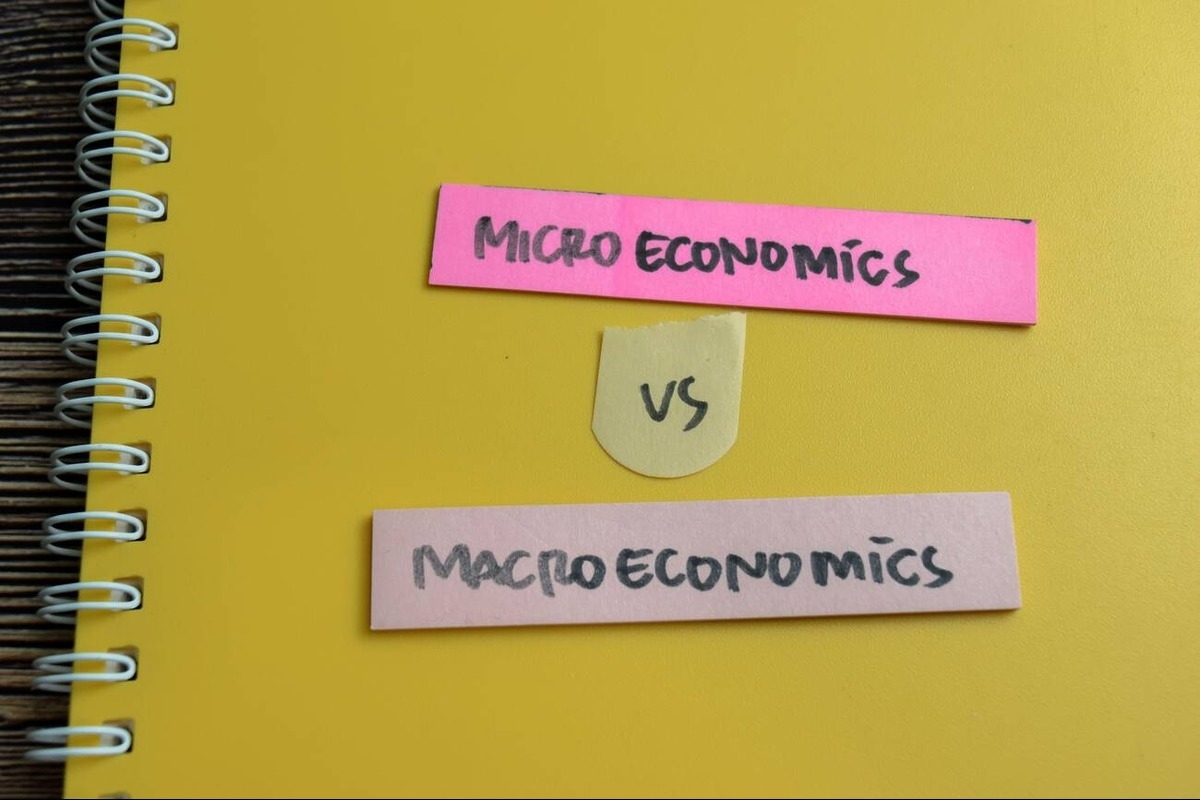
What exactly comes to your mind when you hear or read the word “economics”? Many people consider it a broad subject encompassing markets, money, and even government policies. However, in reality, economics is divided into two main branches: microeconomics and macroeconomics. These branches work closely together to explain how decisions are made. Evidently, microeconomics focuses on the smaller picture - how households, individuals, or businesses must make choices about limited resources, such as what to buy, how much to produce, or how to set prices. On the contrary, macroeconomics looks at the bigger picture, studying the entire economy at the global or national level.
This blog will focus on understanding the key differences between microeconomics and macroeconomics to help students and learners build a strong foundation.
What is AP Economics?
AP Economics is basically a set of advanced placement courses offered by the College Board that introduce high school students to college-level economics. Moreover, the basic purpose of AP economics is to help students build a strong foundation in economic thinking while also providing them with an opportunity to earn college credits. Hence, by opting for this course, students gain valuable knowledge about how businesses, individuals, and governments make decisions about resources - the skillset that is useful for careers and everyday financial choices.
#CTA#AP Roadmap
AP Micro Vs. AP Macro
| Course | AP Microeconomics | AP Macroeconomics |
| Focus | Individual decisions (households, firms) | National/global economy |
| Topics | Supply & demand, elasticity, markets | GDP, inflation, fiscal & monetary policy |
| Exam Format | 60 MCQs + 3 FRQs (2h 10m) | 60 MCQs + 3 FRQs (2h 10m) |
| Difficulty Level | More quantitative, analytical | More conceptual, policy-oriented |
| Best For | Students interested in business, finance | Students interested in politics, policy |
What Does AP Microeconomics Cover?
• Basic economic concepts: scarcity, opportunity costs
• Supply and demand in specific markets
• Costs of production and perfect competition
• Factor markets (labor, capital)
• Imperfect competition (monopoly, oligopoly)
• Market failure and the role of government
• Focus: How individual and business decisions shape markets and resource allocation.
Course Overview for AP Microeconomics
What Does AP Macroeconomics Cover?
• Basic economic concepts (overlapping with AP Micro)
• National income, GDP measurement
• Economic indicators: unemployment, inflation, business cycles
• Fiscal and monetary policies
• The financial sector (banks, money supply)
• International trade and finance
• Focus: Large-scale economic performance and policies impacting the whole economy.
Course Overview for AP Macroeconomics
AP Macro vs. Micro Economics: Exam Structure
Both exams:
• Section 1: 60 multiple-choice questions (70 minutes) — 66% of score
• Section 2: 3 free-response questions (1 long, 2 short) (60 minutes) — 33% of score
• Four-function calculators are allowed in both exams.
• Exam content mirrors the core topics covered in each course.
Which AP Economics Should You Take First?
Well, students usually wonder which course in AP economics they must take first - AP microeconomics or AP macroeconomics. Well, the answer usually depends upon your strengths and interests. Hence, if you think that you’re strong in graphs, math, or even problem-solving, beginning with AP micro would be the better option.
Moreover, microeconomics requires much more calculation-based analysis, such as interpreting supply and demand graphs, cost structures, and elasticity. On the contrary, if you’re more interested in the big picture economy, like how inflation, GDP, or government policies affect the entire nation, then AP macro might be the better beginning point.
A lot of students choose to take AP macro and micro together or one after the other, since a lot of colleges value a strong foundation in both areas. Learning them side by side would help you gain a better understanding of the diff between microeconomics and macroeconomics and would give you clarity on what the difference is between microeconomics and macroeconomics.
Frequently Asked Questions (FAQs)
1. What is AP Econ and AP Economics?
AP Econ refers to AP Economics, a college-level course offered in high school through the College Board. It is divided into two parts—AP Microeconomics and AP Macroeconomics—together known as AP Macro and Micro.
2. Is AP Macro the hardest AP?
How Hard is AP Macro? AP Macroeconomics ranks as an easier-than-average AP subject
3. Can you take AP Macro without micro?
You are not required to have any prerequisites to sign up for the AP Macro course. However, you should be able to read and understand college-level textbooks and possess basic math and graphing skills.
4. What percent is a 5 on AP Micro?
How do I get a 5 on AP® Microeconomics? That's the million-dollar question! First, consider that around 20% of test takers score a 5. It won't be easy, but it is certainly possible to earn the top score.
5. Should I take AP Micro or AP Macro first?
There is no required order, as both courses cover basic economic principles initially. Many students choose based on whether they're more interested in individual business/consumer decisions or national and global economic processes
6. Why should I choose Tutelaprep for AP Economics preparation?
Tutelaprep provides expertly crafted resources, personalized coaching, and extensive practice materials that help students excel in both AP Microeconomics and Macroeconomics. With Tutelaprep’s guidance, learners gain clear concept clarity, score-boosting strategies, and the confidence to tackle even the most challenging AP Economics questions.